

P2A Messaging

Product Trivia

P2A Messaging allows customers to start conversations with businesses — making it one of the most interactive and customer-driven messaging solutions available today.

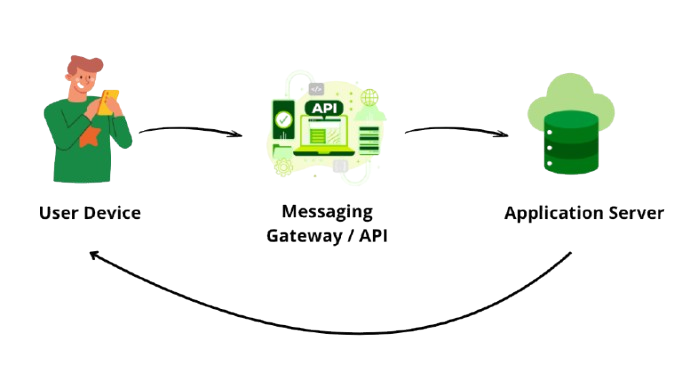
How to P2A Messaging Work

Use Cases

P2A (Person-to-Application) messaging allows users to initiate contact with a business or system by sending messages directly to an application. It supports quick inquiries, requests, and automated responses, enabling efficient two-way interaction and improving customer engagement through simple, user-initiated communication.

Banking and Finance

Sending OTPs, transaction alerts, and fraud notifications.
Banking and Finance

Sending OTPs, transaction alerts, and fraud notifications.
Banking and Finance

Sending OTPs, transaction alerts, and fraud notifications.

Frequently Ask Question (FAQ)

What is P2A Messaging from a technical standpoint?

P2A (Person-to-Application) Messaging refers to inbound messages initiated by end users and received by an application through telecom channels such as SMS short codes, long numbers, virtual numbers, WhatsApp APIs, or USSD gateways.

Users interact via short codes, long numbers, DID/virtual numbers, toll-free numbers, or messaging app IDs. Messages are passed from the operator’s SMSC/OTT gateway to the service provider via SMPP, HTTP callbacks, or webhook endpoints.

Common protocols include HTTP/REST webhooks, SMPP (deliver_sm packets), WebSocket, SIP/USSD integration, or direct connectivity depending on the messaging channel.

Inbound traffic is forwarded to the client’s system via real-time callbacks (webhooks) containing message metadata such as sender MSISDN, timestamp, message content, encoding type, session ID, and operator information.

Platforms often maintain session states using session tokens or operator-provided session IDs, especially for USSD, two-way SMS, and interactive chat flows, allowing multi-step conversation logic.

Yes. Providers typically implement HTTPS/TLS encryption, HMAC signing, OAuth or API key authentication for callbacks, and optional IP whitelisting to secure inbound message delivery.

Yes. The system uses scalable message queues, stateless consumer services, and load-balanced callback dispatchers capable of handling high throughput from campaigns or large customer interactions.

P2A supports:

  • Short Codes (high throughput, high reliability)

  • Long Numbers (MSISDN/DID)

  • Toll-free numbers

  • Virtual mobile numbers

  • WhatsApp Business numbers

  • RCS and OTT IDs
    Availability depends on operator regulations.

Most P2A channels do not provide traditional DLRs (Delivery Reports), but the platform provides message-received confirmations and timestamped logs when the inbound message hits the gateway or callback endpoint.

You need:

  • A provisioned short code/long number

  • An inbound-capable messaging account

  • A publicly accessible webhook endpoint for receiving traffic

  • API keys or authentication tokens

  • Parsing logic for inbound payloads (JSON/SMPP fields)

  • Optional session handling logic if building two-way flows